

Auto insurance rates can vary significantly depending on a wide range of factors. Understanding what influences your premiums—and how to manage them—can help you save money while maintaining the right level of coverage. Whether you need personal coverage or Commercial Vehicle Insurance, knowing the key factors behind your rates is essential for smart insurance decisions.
In this article, we break down the main factors that affect auto insurance rates and provide strategies to manage them effectively.
Key Factors That Affect Auto Insurance Rates
1. Driving History
Your driving record is one of the most significant factors insurers consider. Accidents, traffic violations, or claims history can increase your premiums. Maintaining a clean driving record can help lower your rates over time.
Learn more about protecting your vehicle with our personal auto insurance options.
2. Vehicle Type
The make, model, age, and safety features of your vehicle influence rates. Expensive or high-performance cars may cost more to insure, while vehicles with advanced safety technology or lower repair costs may qualify for discounts.
3. Vehicle Usage
How often and for what purpose you drive your vehicle matters. Daily commuting or business use increases risk, potentially raising premiums. Vehicles used for work require Commercial Vehicle Insurance, which accounts for business-related risk. Explore our commercial auto insurance solutions.
4. Location
Insurance rates can vary by location. High-traffic areas, regions with higher accident rates, or areas prone to theft or natural disasters may result in higher premiums.
5. Coverage Limits and Deductibles
Choosing higher coverage limits increases your premiums, while opting for a higher deductible can lower your monthly costs. Balancing coverage needs with affordability is key.
6. Age, Gender, and Experience
Younger drivers or those with less driving experience often face higher premiums due to increased risk. Some insurers also consider gender as part of risk assessment, which can affect rates.
7. Credit and Financial History
In some states, insurers consider credit history to assess risk. Maintaining good financial habits can positively impact your auto insurance rates.
How to Manage Your Auto Insurance Rates
While some factors, like age or location, cannot be changed, there are several strategies to manage your premiums:
● Maintain a clean driving record
● Choose vehicles with strong safety ratings
● Bundle policies for multi-policy discounts
● Review your coverage limits regularly
● Include only necessary optional coverages
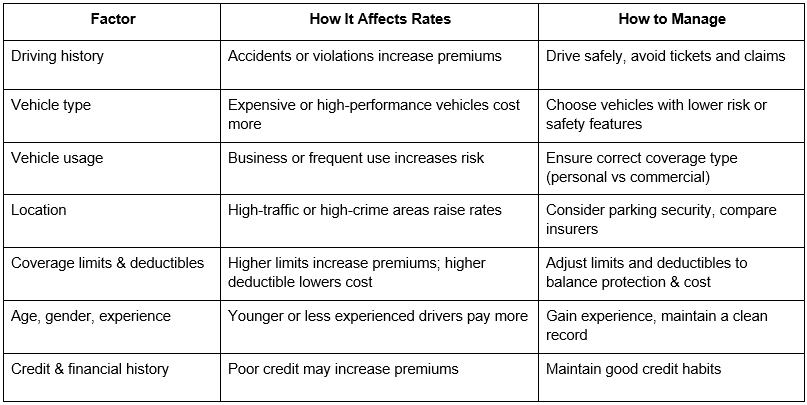
Factors Influencing Auto Insurance Rates: Summary Table
Choosing the Right Coverage for Your Needs
Understanding what impacts your auto insurance rates helps you make informed decisions about coverage. Whether you need personal auto insurance for daily commuting or Commercial Vehicle Insurance for business use, a tailored policy ensures proper protection without overpaying.
For guidance on coverage options, review our insurance resources for tips and tools to make smart insurance choices.
Get a Quote and Take Control of Your Insurance Costs
Managing your auto insurance rates starts with choosing the right policy and provider. At Brook Insurance Associates, LLC, we help drivers and business owners find the right coverage at the best possible rate.
Contact us today to request a quote or schedule a policy review and learn how you can manage your auto insurance rates while keeping your vehicles fully protected. Visit our contact page to get started.
Frequently Asked Questions (FAQs)
Q1: Why do some drivers pay higher insurance rates than others?
A1: Insurance premiums are based on risk factors such as driving history, vehicle type, usage, location, and personal demographics. Higher risk typically leads to higher rates.
Q2: How can I lower my auto insurance rates?
A2: Maintain a clean driving record, choose safe vehicles, bundle policies, adjust deductibles, and review coverage regularly to ensure it matches your needs.
Q3: Does using a personal vehicle for business affect my rates?
A3: Yes. Business use under a personal policy may result in denied claims. Vehicles used for work should have Commercial Vehicle Insurance.
Q4: Are younger drivers always charged higher premiums?
A4: Generally, yes. Younger or less experienced drivers face a higher risk, but rates can improve with a clean record and safe driving habits.
Q5: What role does my credit history play in insurance rates?
A5: In some states, insurers use credit history to help assess risk. Maintaining good credit can help reduce premiums.