
Choosing the right auto insurance policy is about more than just finding the lowest price. Coverage limits, exclusions, deductibles, and policy features all play a critical role in protecting your vehicle and finances. Whether you’re comparing personal policies or evaluating options that may require Commercial Vehicle Insurance, understanding what to look for can help you make a confident and informed decision.
This guide walks through the key elements to compare when reviewing auto insurance policies.
Key Features to Compare in Auto Car Insurance Policies
1. Coverage Types
Not all auto insurance policies offer the same coverage options. Standard policies typically include liability, collision, and comprehensive coverage. Some policies also offer medical payments, personal injury protection, uninsured or underinsured motorist coverage, and roadside assistance.
Reviewing coverage types ensures you’re protected in a variety of driving scenarios. Learn more about available options with our personal auto insurance coverage.
2. Liability Limits
Liability limits determine how much your policy will pay if you’re responsible for an accident. Policies with lower limits may reduce premiums, but can leave you financially exposed. Higher limits provide stronger protection, especially if an accident results in significant property damage or injuries.
3. Deductibles
A deductible is the amount you pay out of pocket before insurance coverage applies. Lower deductibles mean higher premiums, while higher deductibles can reduce monthly costs. Choosing the right deductible depends on your financial comfort level and risk tolerance.
4. Exclusions and Policy Restrictions
Every policy has exclusions—situations or uses that are not covered. Business use, ridesharing, or delivery services are often excluded from personal policies. If your vehicle is used for work, you may need Commercial Vehicle Insurance to avoid denied claims. Review our commercial insurance solutions for business-related coverage.
5. Discounts and Savings Opportunities
Insurance providers often offer discounts for safe driving, bundling policies, vehicle safety features, or low annual mileage. Comparing available discounts can significantly impact the overall cost of your policy.
6. Claims Process and Customer Support
A competitive premium means little if the claims process is slow or complicated. Research how insurers handle claims, response times, and customer service support to ensure reliability when you need it most.
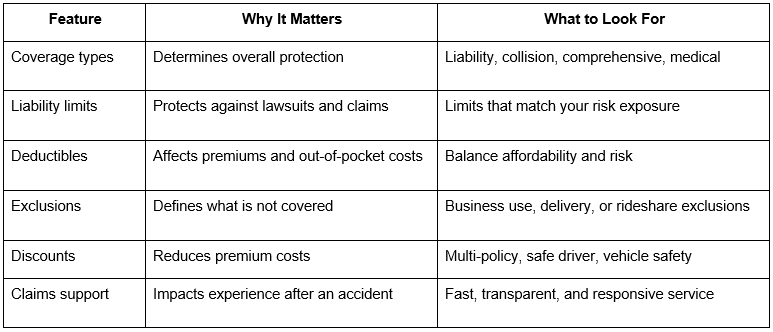
Auto Insurance Policy Comparison Table
Use the table below to compare key features across auto car insurance policies:
Choosing the Right Policy for Your Needs
The best auto insurance policy is one that aligns with how you drive, the type of vehicle you own, and your financial goals. If you use your vehicle for work-related activities, transitioning from a personal policy to Commercial Vehicle Insurance can prevent coverage gaps and costly surprises.
For additional guidance, explore our insurance resources to better understand your options.
Compare Policies With Confidence
Comparing auto insurance policies doesn’t have to be overwhelming. At Brook Insurance Associates, LLC, we help drivers and business owners evaluate coverage options, identify exclusions, and select policies that provide real protection—not just low premiums.
Contact us today to request a quote or schedule a policy review, and let our team help you find an auto insurance policy that fits your needs and budget. Visit our contact page to get started.
Frequently Asked Questions (FAQs)
Q1: What is the most important feature to compare in auto insurance policies?
A1: Coverage limits and exclusions are critical. A low-cost policy with insufficient limits or major exclusions may not provide adequate protection.
Q2: Is the cheapest auto insurance policy always the best option?
A2: Not necessarily. The best policy strikes a balance between cost, coverage, customer service, and claims support.
Q3: When should I consider Commercial Vehicle Insurance instead of personal auto insurance?
A3: If your vehicle is used for business purposes such as deliveries, transporting equipment, or employee use, commercial coverage is required.
Q4: How often should I review my auto insurance policy?
A4: You should review your policy annually or whenever your driving habits, vehicle, or usage changes.
Q5: Can I switch auto insurance policies mid-term?
A5: Yes. Many drivers switch policies mid-term, though it’s important to review any cancellation fees or coverage gaps before making changes.